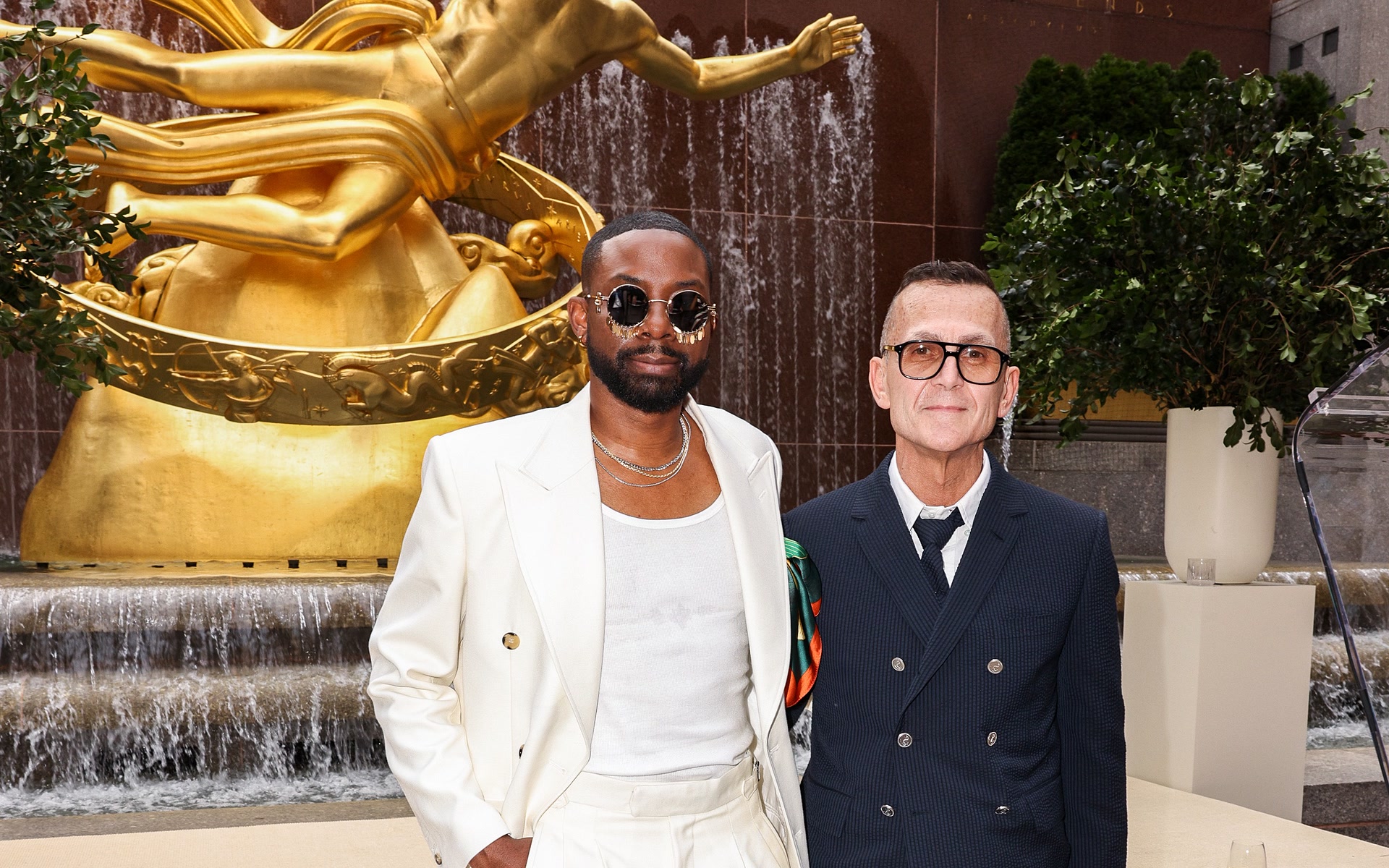
Rockefeller Center has a way of turning scale into emotion. Standing at the Rink for the launch of United Flags of Fashion, I kept looking up. More than 120 flags moved above one of New York’s most recognizable landmarks, each carrying a designer’s interpretation of an American state or territory.
It was visually striking, of course. But what stayed with me was the idea behind it: fashion as a living record of how a country sees itself.
I attended representing SPREEAI, surrounded by designers, industry leaders, and people who have spent their careers shaping American fashion. Moments like this always sharpen something I believe deeply. Fashion is not separate from technology, culture, or identity. It is where all three become visible.
WHAT UNITED FLAGS OF FASHION MADE VISIBLE
Vogue, the Council of Fashion Designers of America, America250, and Rockefeller Center presented United Flags of Fashion in recognition of the nation’s 250th anniversary. The organizers invited designers to reimagine the flags of the 50 states, five territories, and Washington, D.C., bringing their own histories, materials, and points of view to symbols we usually treat as fixed. The full designer list is available on the official CFDA installation page.
That premise is powerful because the most meaningful symbols never truly stand still. They change as the people represented by them change. In the hands of designers, familiar colors and geometry became stories about place, heritage, craft, optimism, resistance, and belonging.
The installation also made a quiet argument for fashion itself. A flag and a garment share more than fabric. Together, they can communicate identity before a word is spoken, carry memory, and make an individual feel part of something larger without asking them to disappear inside it.
UNITED FLAGS OF FASHION: THE PEOPLE BEHIND THE MOMENT
The launch brought together an unusually broad cross-section of American fashion. Established houses stood beside newer independent voices. Designers, operators, editors, and builders moved through the same space, not because everyone approached the industry in the same way, but because the future of fashion will require more of these collisions.
It was especially meaningful to spend time with Steven Kolb, whose leadership at the CFDA continues to create room for American designers to be seen in a wider cultural context, and with Jasmin Larian Hekmat, whose work with Cult Gaia has built an instantly recognizable design language. I was also grateful to Anna Wintour, Thom Browne, and Steven for the invitation and for creating a platform that treated fashion not as decoration around the national story, but as part of the story itself.
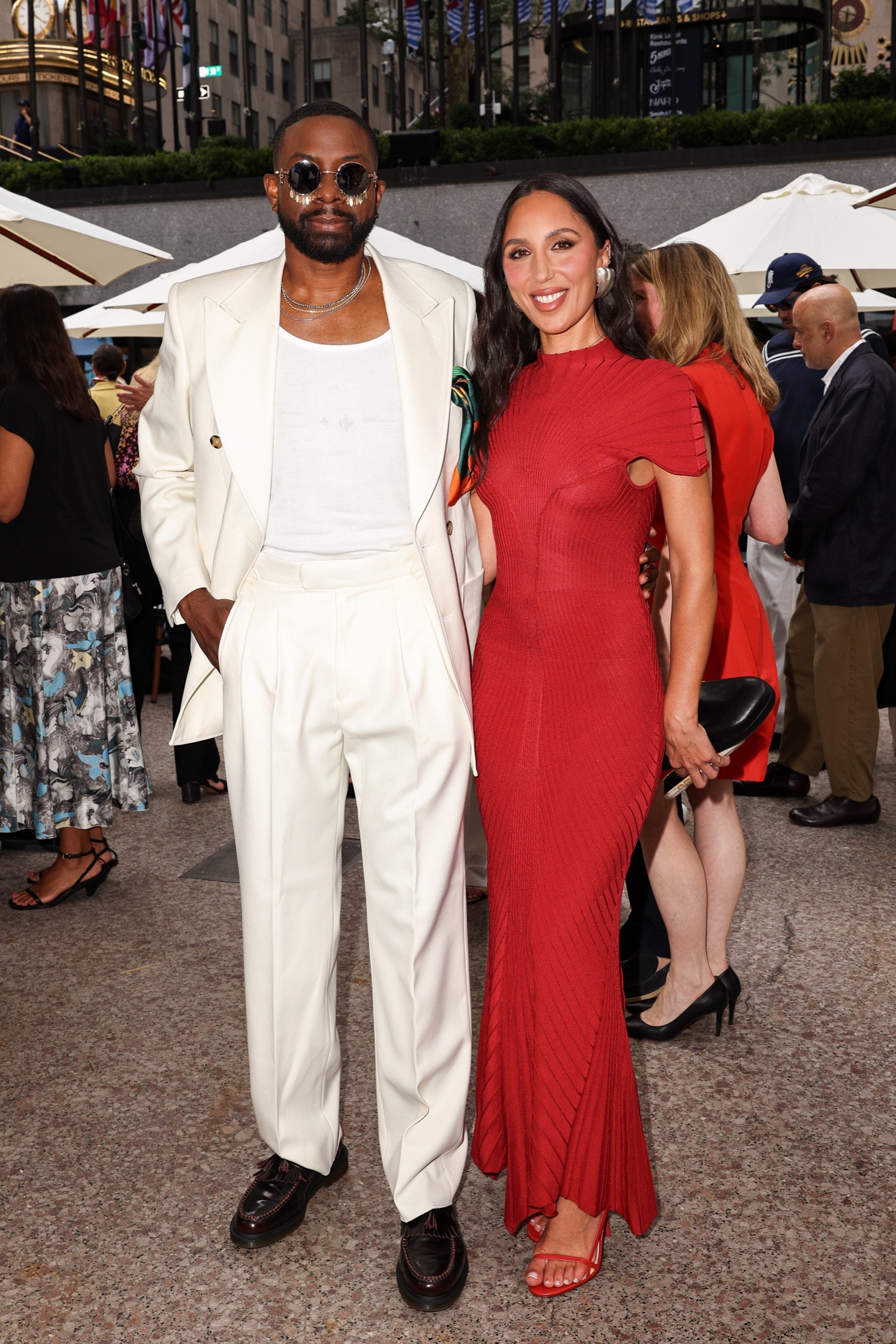
Good rooms do more than gather important people. They create permission for different disciplines to take one another seriously. This was one of those rooms.
UNITED FLAGS OF FASHION: WHERE CREATIVITY AND TECHNOLOGY MEET
I have written before about the convergence of fashion and technology, and about why fashion is the most interesting problem in AI. Being at United Flags of Fashion made that conviction feel even more concrete.
Technology will not build the next chapter of this industry by asking creativity to become more predictable. The future will emerge when technology becomes precise enough, useful enough, and emotionally intelligent enough to serve creative vision without flattening it.
That is the standard we try to hold at SPREEAI. AI should help people discover what feels like them, understand fit with more confidence, and move through fashion with greater possibility. It should give designers and brands better ways to express their work. The technology matters, but only because the human experience on the other side matters more.
Seeing more than 120 interpretations moving together above the plaza was a reminder that variety is not noise. It is the point. A system designed for fashion has to understand that identity is not a fixed category. It is personal, contextual, and always in motion.
WHAT I LEFT WITH
I left Rockefeller Center thinking about collaboration. Not the word as it appears in a press release, but the harder version: creative people and technical people respecting one another enough to build something neither could produce alone.
United Flags of Fashion honored American creativity by letting it remain plural. Every flag had its own point of view. Together, they became a fuller portrait of the country and of the industry helping shape how it sees itself.
That is the future I want to help build: one where craft and computation are not competing forces, where technology expands the space for taste, and where the most human parts of fashion remain the ones leading us forward.
The flags will remain at Rockefeller Center through September 4, 2026. If you are in New York, look up.
 English
  French
  Italian
  German
  Spanish
  Portuguese
  Japanese
  Chinese (China)
  Chinese (Taiwan)
  Hindi
Hindi  Arabic
  Bengali
  Urdu
Urdu  Indonesian
  Malay
Malay  Vietnamese
  Thai
Thai  Korean
  Russian
  Turkish
  Dutch
Dutch  Polish
  Ukrainian
  Romanian
  Czech
Czech  Greek
Greek  Hebrew
  Swahili
  Yoruba