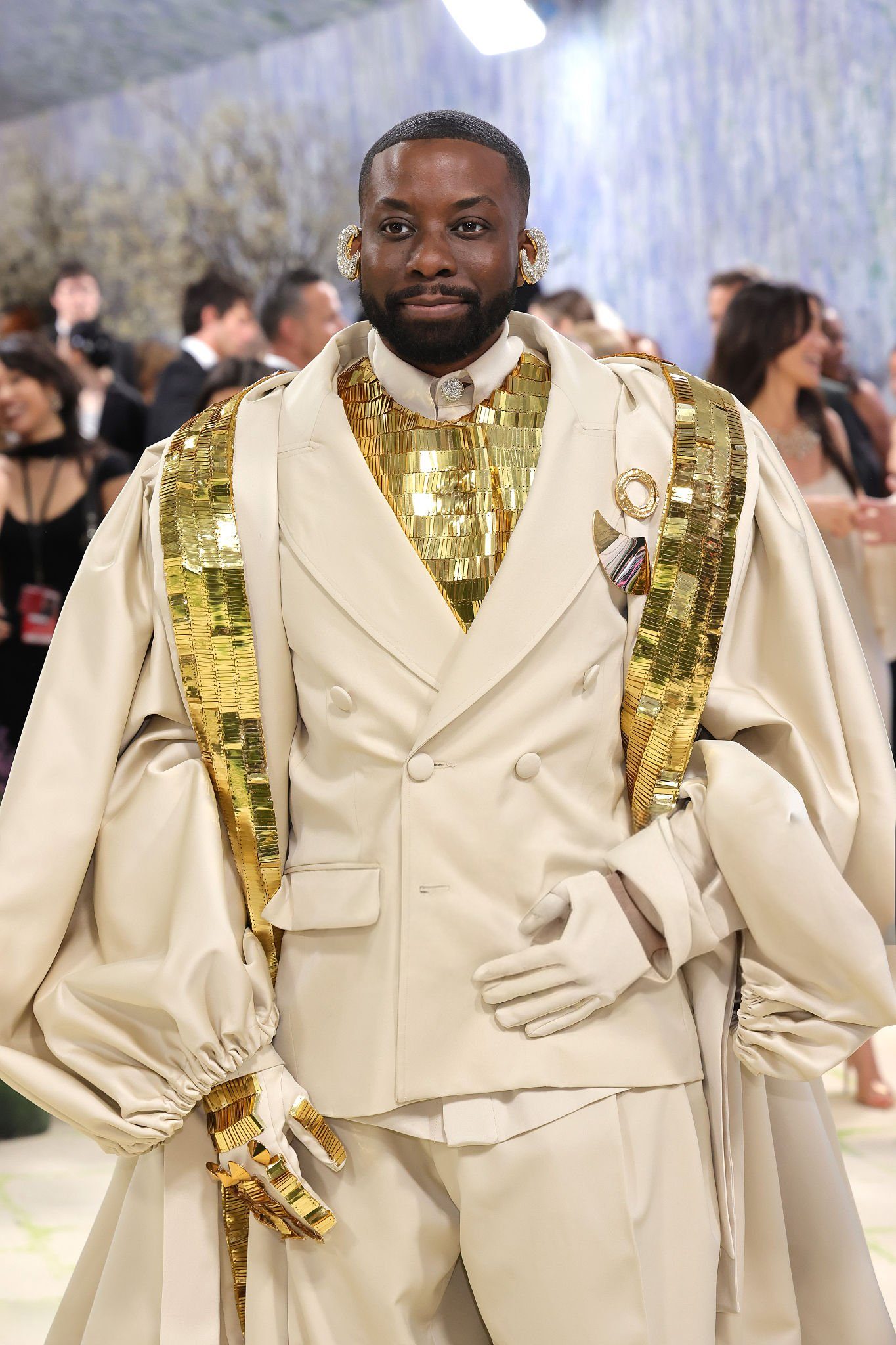
Two years in a row at the Met Gala. That means something — not because of the spectacle, but because of what it keeps confirming. Mostly, it confirms that fashion and technology belong in the same conversation.
Fashion is not decorative. It never was. It is one of the few languages every culture has spoken simultaneously, across centuries, without needing a translator. The moment you understand that, technology stops feeling like an outsider trying to enter the room and starts looking like the natural next chapter.
Where fashion and technology converge
I attended this year alongside Charles Harbison. If you know Charles’s work, you already understand why. His approach to structure, his sensitivity to the emotional weight of a garment — the way a silhouette can carry grief, confidence, or desire — is exactly the kind of intelligence that cannot be manufactured. It has to be cultivated. We’re building toward a launch together through SPREEAI, and I can say without hesitation that what’s coming reflects both of our convictions about what fashion technology should actually feel like.
Several other collaborations are taking shape behind the scenes. In time.
This year’s theme — “Fashion Is Art” — could have been a provocation. For the industry, it probably was. But for me it landed as confirmation. The work we’re doing at SPREEAI was never about inserting technology where it didn’t belong. It was about building something with enough precision, enough taste, enough emotional intelligence to sit at the same table as the artistry that already exists in this industry. That’s a harder standard than most tech companies set for themselves. It’s the only one worth chasing.
What the Met makes visible every year is something Anna Wintour and Vogue have quietly understood for decades: culture moves fastest at the intersection of disciplines. Fashion. Art. Architecture. Identity. Increasingly — technology. The brands and builders who recognize that convergence early are the ones who end up defining what comes next.
A lot more ahead.
 English
  French
  Italian
  German
  Spanish
  Portuguese
  Japanese
  Chinese (China)
  Chinese (Taiwan)
  Hindi
Hindi  Arabic
  Bengali
  Urdu
Urdu  Indonesian
  Malay
Malay  Vietnamese
  Thai
Thai  Korean
  Russian
  Turkish
  Dutch
Dutch  Polish
  Ukrainian
  Romanian
  Czech
Czech  Greek
Greek  Hebrew
  Swahili
  Yoruba