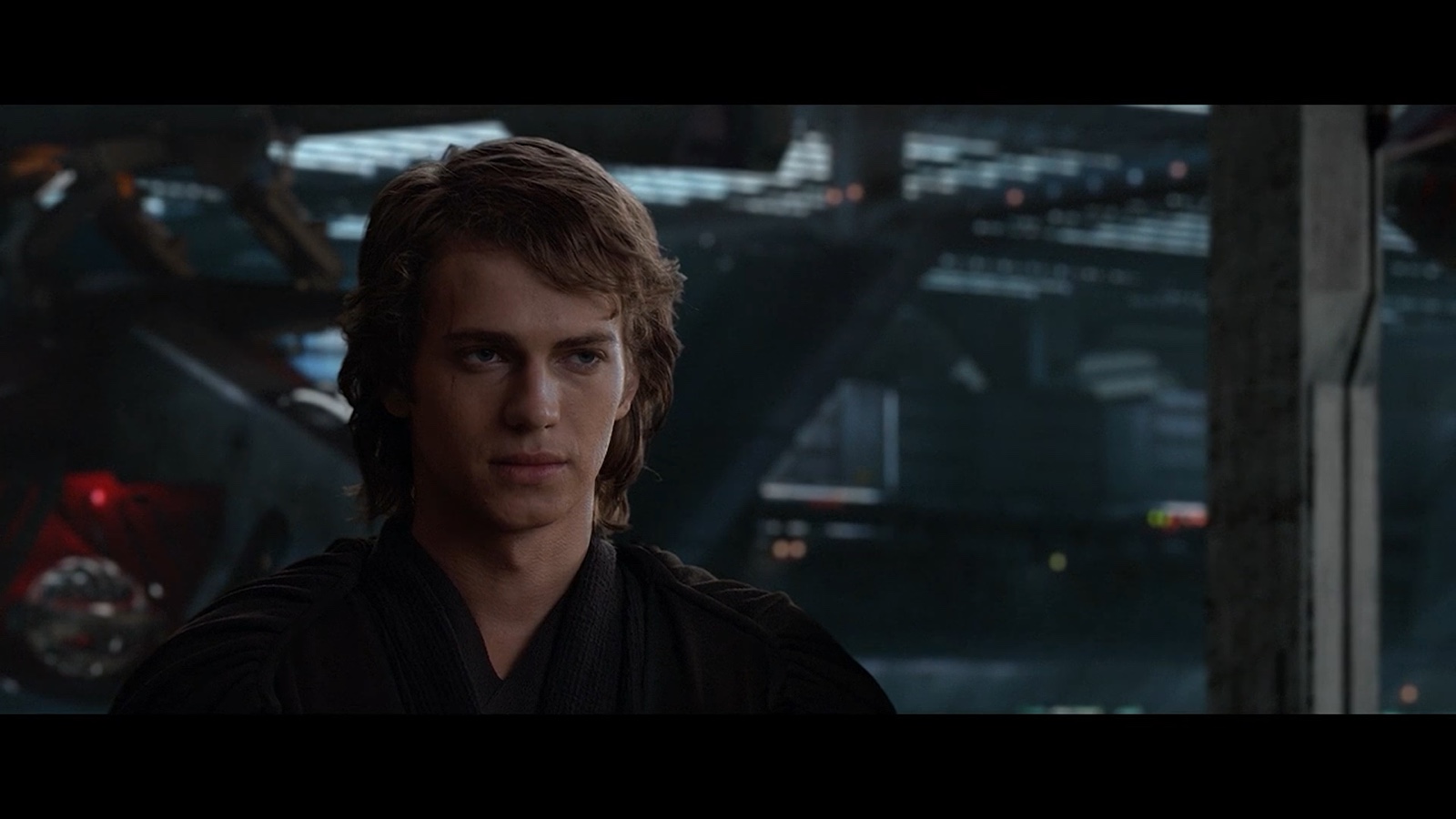
Featured still from Anakin Skywalker — I Feel Lost. Video edit by Jack Wright; Star Wars footage © Lucasfilm Ltd.; music by Aaron Hibell. Used for commentary.
I have watched Star Wars at different points in my life, and it has never been the same story twice. When you are young, you see the scale of it: lightsabers, impossible worlds, and a clear fight between good and evil. Later, you see something more uncomfortable. You see what happens when gifted people carry fear in silence, when institutions confuse discipline with distance, and when the desire to protect becomes the need to control.
Those are the Star Wars leadership lessons that have stayed with me.
Jack Wright’s edit, Anakin Skywalker — I Feel Lost, compresses Anakin’s entire tragedy into a little over two minutes. We see the gifted child, the celebrated warrior, the husband terrified of loss, the student who no longer trusts his teachers, and finally the machine. The edit reminded me that Anakin does not become Darth Vader in one decision. He gets there through a series of moments in which pain goes unspoken, trust erodes, and power is offered as a substitute for peace.
Talent Does Not Make You Whole
Anakin is the most gifted person in nearly every room he enters. He is brave, inventive, loyal, and capable of things other people cannot imagine. None of that means he understands himself.
That distinction matters in leadership. We tend to promote visible ability and assume maturity will arrive with the title. It does not. Responsibility amplifies whatever is already present. Judgment gets stronger, but so can insecurity. Confidence can become clarity, or it can become entitlement. Power does not resolve the inner life. It gives the inner life a larger stage.
Building companies has taught me that the smartest person in the room is not always the person you want making the hardest call. Skill matters. So does the ability to sit with uncertainty without making everyone else carry it for you.
Fear Is Information, Not Instruction
The official Star Wars account of Anakin’s life describes a compassionate hero whose fear of loss becomes his downfall. That is what makes his story tragic. His fear begins in love. He wants to keep the people closest to him safe. But once fear takes control, protection becomes possession and possibility becomes threat.
Fear is not weakness. It is information. It tells us what matters, what feels exposed, and what we believe we cannot survive losing. The problem begins when we let it make decisions without questioning it.
Leaders do this all the time. We fear losing momentum, talent, capital, relevance, or control. Then we call the reaction “urgency” and expect everyone around us to absorb the cost. The discipline is not to become fearless. It is to name the fear early enough that it does not quietly become the strategy.
Trust Is Not the Same as Obedience
Anakin is surrounded by people, but he is profoundly alone. The Jedi see his volatility and respond with more distance. Palpatine sees the same vulnerability and offers something that feels like understanding. One side does not know how to reach him. The other knows exactly how to use him.
That is a leadership failure as much as it is a personal one.
People need standards, accountability, and honest feedback. They also need to know that telling the truth will not cost them their place in the room. If the only acceptable answer is obedience, people learn to hide the information a leader most needs to hear. Silence can look like alignment right up until everything breaks.
Real trust is not the absence of disagreement. It is the confidence that disagreement can survive the conversation.
The Need to Protect Can Become the Need to Control
Anakin tells himself that everything he is doing is for Padmé. Yet the more desperately he tries to control the future, the less he is able to see the person in front of him. His love becomes inseparable from his refusal to accept an outcome he did not choose.
That lesson travels well beyond Star Wars. You can care deeply about a person, a team, or a mission and still damage it by refusing to let it have a life beyond your control.
Founders are especially vulnerable to this. We build something from nothing, carry it through moments when almost nobody else can see it, and naturally feel protective. But stewardship is not ownership of every answer. Protecting the vision does not mean strangling every alternative. At some point, trust has to become part of the architecture.
Potential Is Not Character
Anakin is called the Chosen One. That promise follows him everywhere, but it cannot choose for him. His gifts create possibility. His repeated decisions create his character.
Titles work the same way. CEO, founder, manager, mentor, parent—none of them make us the person the word describes. They only create a new set of decisions. Character is what happens when the room is tense, the outcome is unclear, and there is no applause for doing the right thing.
I have learned to be careful with potential, especially my own. Potential is flattering because it describes what might happen. Discipline is less glamorous because it asks what I will do today.
Leave a Path Back
The final lesson is the one I appreciate more as I get older: a person should be held accountable, but never reduced entirely to the worst thing they have done.
Anakin causes enormous harm. His return does not erase it. What changes is that Luke refuses to believe the good in him is completely gone, and Anakin makes one final choice that proves it is still there.
Accountability and hope are not opposites. Good leaders understand both. There must be consequences when trust is broken. There should also be a credible path for someone willing to face the truth, repair what can be repaired, and become more than their failure.
What Star Wars Taught Me
Star Wars taught me that the real battle is rarely between perfect good and obvious evil. More often, it is between fear and honesty, control and trust, ego and service. It is fought in ordinary decisions long before anyone calls them history.
It taught me that strength without self-knowledge is fragile. That love without freedom becomes control. That institutions can lose good people when they demand composure but make no room for humanity. And that one honest choice still matters, even after years of wrong ones.
Most of all, it taught me that leadership is not about being the most powerful person in the room. It is about being grounded enough that your power does not need to prove itself.
That lesson reaches far beyond a galaxy far, far away.
 English
  French
  Italian
  German
  Spanish
  Portuguese
  Japanese
  Chinese (China)
  Chinese (Taiwan)
  Hindi
Hindi  Arabic
  Bengali
  Urdu
Urdu  Indonesian
  Malay
Malay  Vietnamese
  Thai
Thai  Korean
  Russian
  Turkish
  Dutch
Dutch  Polish
  Ukrainian
  Romanian
  Czech
Czech  Greek
Greek  Hebrew
  Swahili
  Yoruba